







What Is a Musette? From the Feed Zone to Your Everyday Bag
A musette is the lightweight shoulder bag that team staff hand up to riders in the feed zone of a road race. It holds food and bottles for the next stretch of the race. Riders hook it by the strap, empty it into their jersey pockets and let it go, often into the hands of a waiting fan.
In French, a musette is simply a small bag carried over the shoulder, the kind workers once used for their lunch. Cycling borrowed the word and gave it a second life.
How does a musette work in a race?
Long road races need fuel, and three back pockets only hold so much. So organisers mark out a feed zone, a stretch of road where team staff stand at the roadside with musettes ready. The soigneur holds the bag out by its long strap. The rider hooks an arm through, swings it over the shoulder and rides on.
It sounds easy. It is not. Riders pass in a tight bunch, staff lean towards the road, and one missed grab can mean a hungry hour. Experienced soigneurs make the handover look effortless, and riders learn to trust the outstretched arm of their own team.
The long strap is the whole trick. It lets the rider take the bag at arm's length and loop it over the head without braking. Then the food goes into the pockets one item at a time while the bunch rolls on. A few kilometres later, the empty bag is gone.
What is inside a musette?
It changes with the era, the race and the rider. Think rice cakes wrapped in foil, small sandwiches, bars and gels, perhaps a can of something fizzy late in the day, plus one or two bidons. Old race photos show bread rolls, fruit and little tarts. The principle never changes: real food, easy to eat with one hand.

Why do riders throw the musette away?
Because the bag has done its job. Once the food is in the pockets, the musette is dead weight and a flapping hazard. So it goes. Modern races mark out litter zones where riders may drop bags and bottles, and riders who throw rubbish elsewhere risk a penalty.
For fans, those zones are gold. A team musette picked up at the roadside is one of cycling's most loved souvenirs. Free, a little grubby and full of the race. You take it home, you wash it, and you carry it for years.
Teams print their musettes in team colours with sponsor names, so every season brings new designs. Some fans keep one from every race they watch. A drawer full of musettes is a diary of summers spent at the roadside.
How did the musette become an everyday bag?
Look at the design. A flat body, a long strap, no frills. It carries lunch, a book and a spare layer. It folds to almost nothing. It sits across the body and stays out of the way. The same qualities that work in a feed zone work on the walk to the bakery.
Musettes have long turned up on shoulders far from any race: mechanics in the paddock, journalists at the finish, fans on the train home. Over time the feed bag became a quiet signal. This person knows the sport.

Our take on the musette
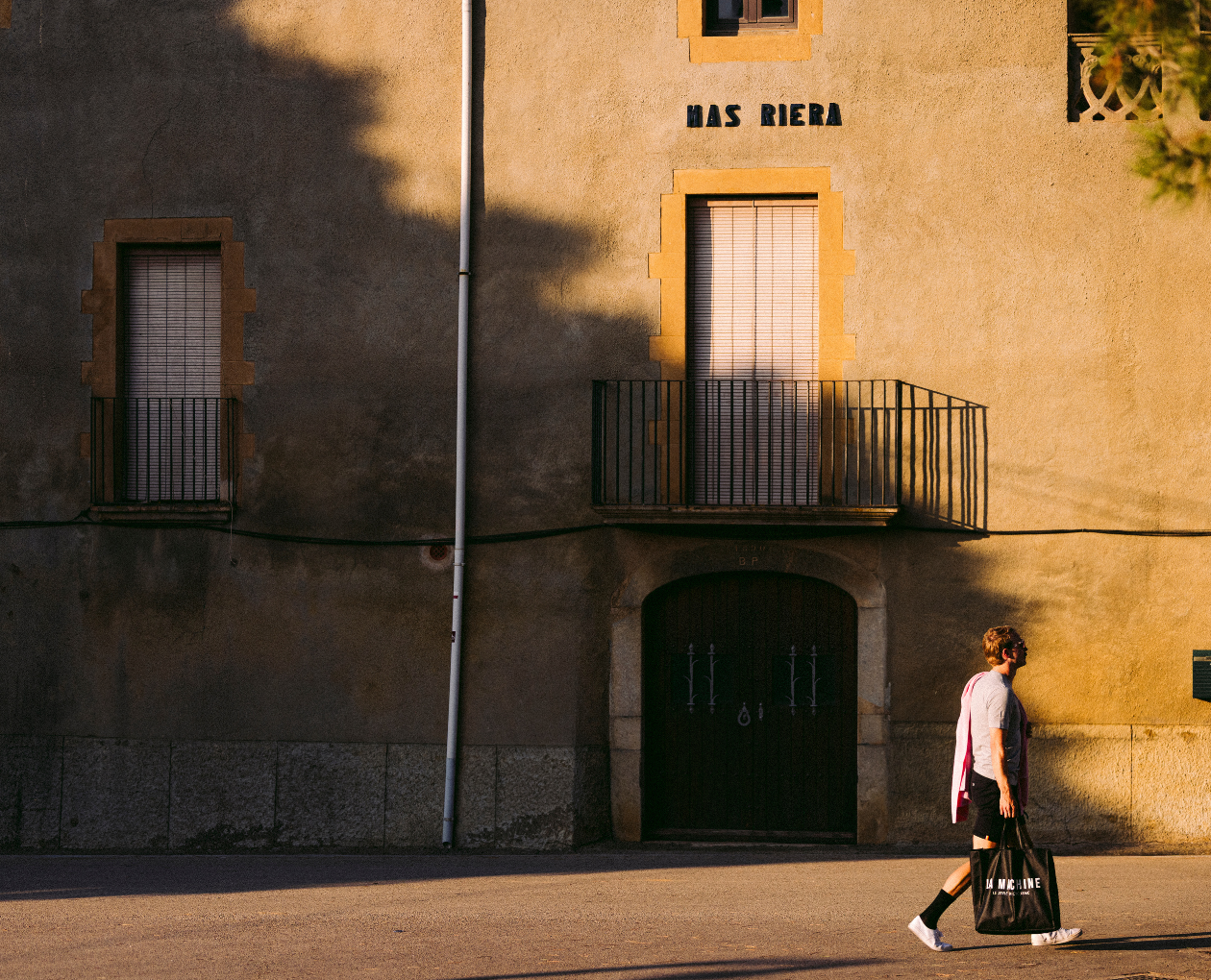
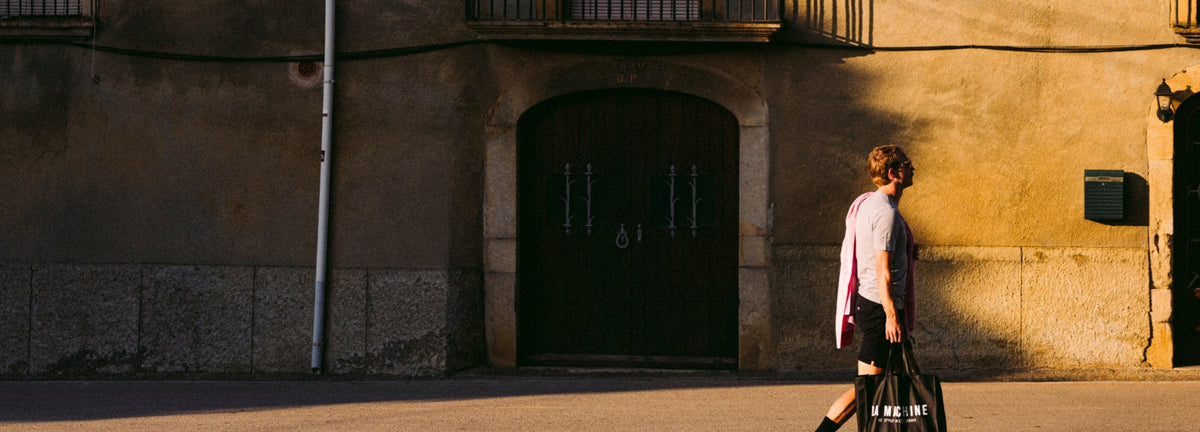
We designed the La Machine Musette for the moments between rides. The idea is the same as at the roadside: a flat bag with a long strap, made to be carried everywhere. Choose the Musette in black, white or blue, or browse all our bags.
Pair it with a tee and a cap and you have the unofficial uniform of the coffee stop. Read more about that ritual in our piece on the café stop in cycling.
FAQ
What does musette mean in cycling?
A musette is the feed bag handed to riders in a race's feed zone. The word is French for a small shoulder bag.
Can you keep a musette thrown by a pro rider?
Yes. Fans collect them at the roadside all the time, especially near feed zones and litter zones. Stay well clear of the road while riders pass.
Is a musette the same as a tote bag?
Close, but not quite. A musette is usually flatter, with a single long strap made to go across the body, so it stays put while you move.
From the feed zone to the bakery queue. Cycling culture, made wearable.
Leggi di più
Cyclocross is Belgium’s winter religion. What the sport is, why Flanders loves it, what race day feels like and what to wear on the tape.
What makes a good cycling hoodie for life off the bike: heavyweight fabric, a fit cut for a rider's frame, practical details and a design with meaning.




Commenta
Questo sito è protetto da hCaptcha e applica le Norme sulla privacy e i Termini di servizio di hCaptcha.