










Cyclocross in Belgium: Mud, Frites and Winter Weekends
Cyclocross in Belgium is a winter religion. Short, brutal races of around an hour run almost every weekend from autumn to late winter, on muddy and sandy courses lined with fans. People come for the racing and stay for the frites, the beer and the atmosphere.
Grey sky. Cold feet. Mud to the ankles. And somehow, it is the warmest place in Flanders.
What is cyclocross?
Take a drop-bar bike, give it knobbly tyres and more clearance, then send it round a short off-road lap. Grass, mud, sand, steep banks, wooden barriers. Riders jump off, shoulder the bike, run, and jump back on. The lap repeats until the hour is up. Then the bell, the last lap, and someone in a mud mask with arms in the air.
It is quick, close and loud. From one corner of the course you can see half the race. You can hear the riders breathing. That closeness is what turned a winter training habit into a national passion.
Why is cyclocross so big in Belgium?
Partly geography: wet winters and plenty of mud. Partly calendar: the road season sleeps, and Flanders needs something to cheer for. Mostly culture. Cycling here is not a hobby. It is part of the week, the family, the village.
Races run through towns and forests, dunes and parks. The sand at Koksijde. The pit at Zonhoven. The Koppenbergcross in Oudenaarde, where the riders battle up the same cobbled hill that made the Tour of Flanders famous. Each course has its own character and its own regulars, standing in the same spot every year.
The heroes are local too. Sven Nys, the Cannibal of Baal, filled the fields for years. Then came a new generation, with Wout van Aert and the Dutchman Mathieu van der Poel trading cyclocross world titles before taking their engines to the spring Classics. Belgium watched them grow up in the mud.

What is a Belgian cyclocross race like?
Picture it. A Sunday in December. Breath in the air. A field churned by a hundred tyres. Fans three deep at the tape, ringing bells, shouting names. Somewhere behind you, Flemish commentary booms over the music.
Then the smell. Frites in paper cones with mayonnaise on top. Smoke from the food stands. Beer poured into plastic cups in the big tent, where the party starts before the elite race is even over. Cyclocross is a sport, a fair and a reunion, all on one muddy field.
Fans move around the course during the race, walking from the sand to the barriers to the steep run-up. That is the joy of it. You are not a spectator in a grandstand. You are part of the course.
When is the cyclocross season?
Roughly October to February. The big series run through the winter, the Christmas holidays are packed with races, and the season builds towards the world championships at the start of the year. Winter weekends in Flanders find a rhythm: ride in the morning, cross in the afternoon, frites on the way home.

What should you wear to watch cyclocross?
Dress for standing still in the cold. That is the whole trick. Layers on top, a proper jacket, a beanie, a neck warmer, warm socks and boots you do not mind ruining. Our full guide to what to wear to watch cyclocross goes deeper.
A good outfit for the cross is the same as a good off-bike wardrobe: fewer pieces, better made, worn for years. A warm hoodie under a padded jacket, a neck warmer pulled high, a beanie on top. Pieces you wear to the race on Sunday and to the café on Monday. Mud washes out. Good fabric stays.

FAQ
How long is a cyclocross race?
Elite races last around an hour, over a short lap that riders repeat many times. Younger categories race for less.
Why do cyclocross riders carry their bikes?
Some sections are quicker on foot: steep banks, deep sand, barriers and stairs. Riders dismount, shoulder the bike, run and remount without losing rhythm.
What do fans eat at a Belgian cyclocross race?
Frites with mayonnaise, something hot from a food stand and a beer in the tent. It is part of the ritual.
See you in the mud. Bienvenue à La Machine.
もっと見る
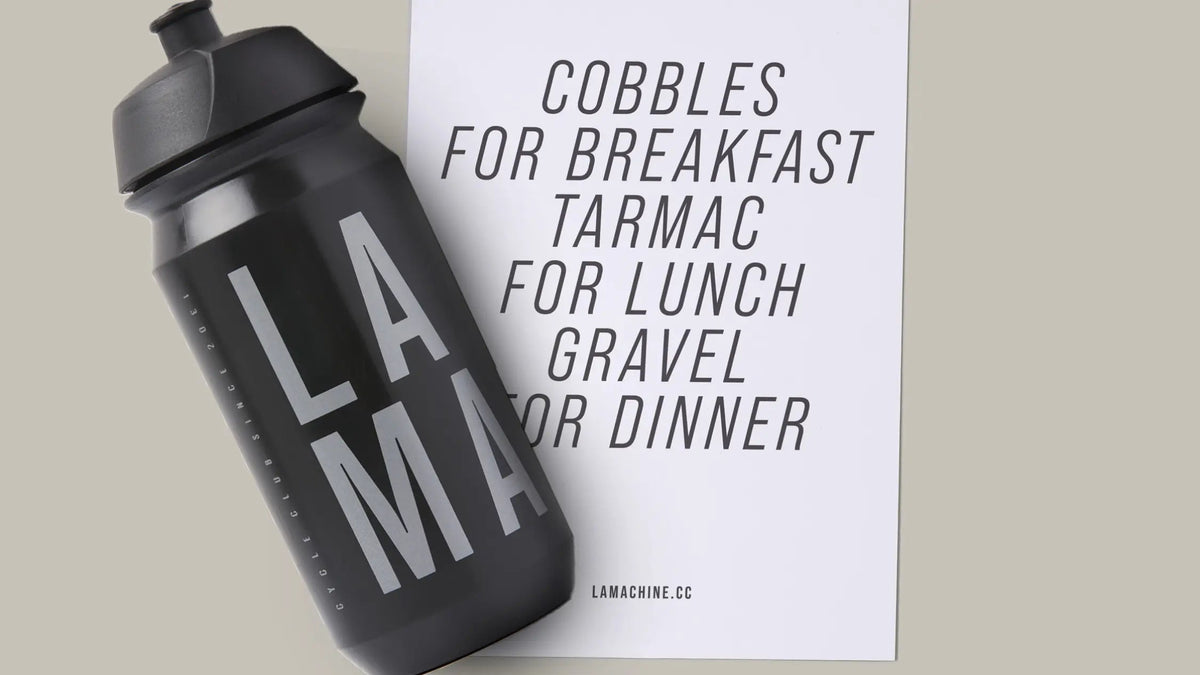
Bidon is the cyclist's word for a water bottle, borrowed from French. Here is where the word comes from, who carries the bidons in a race, and why fans chase them at the roadside.

What makes a good cycling hoodie for life off the bike: heavyweight fabric, a fit cut for a rider's frame, practical details and a design with meaning.




コメントを書く
このサイトはhCaptchaによって保護されており、hCaptchaプライバシーポリシーおよび利用規約が適用されます。